
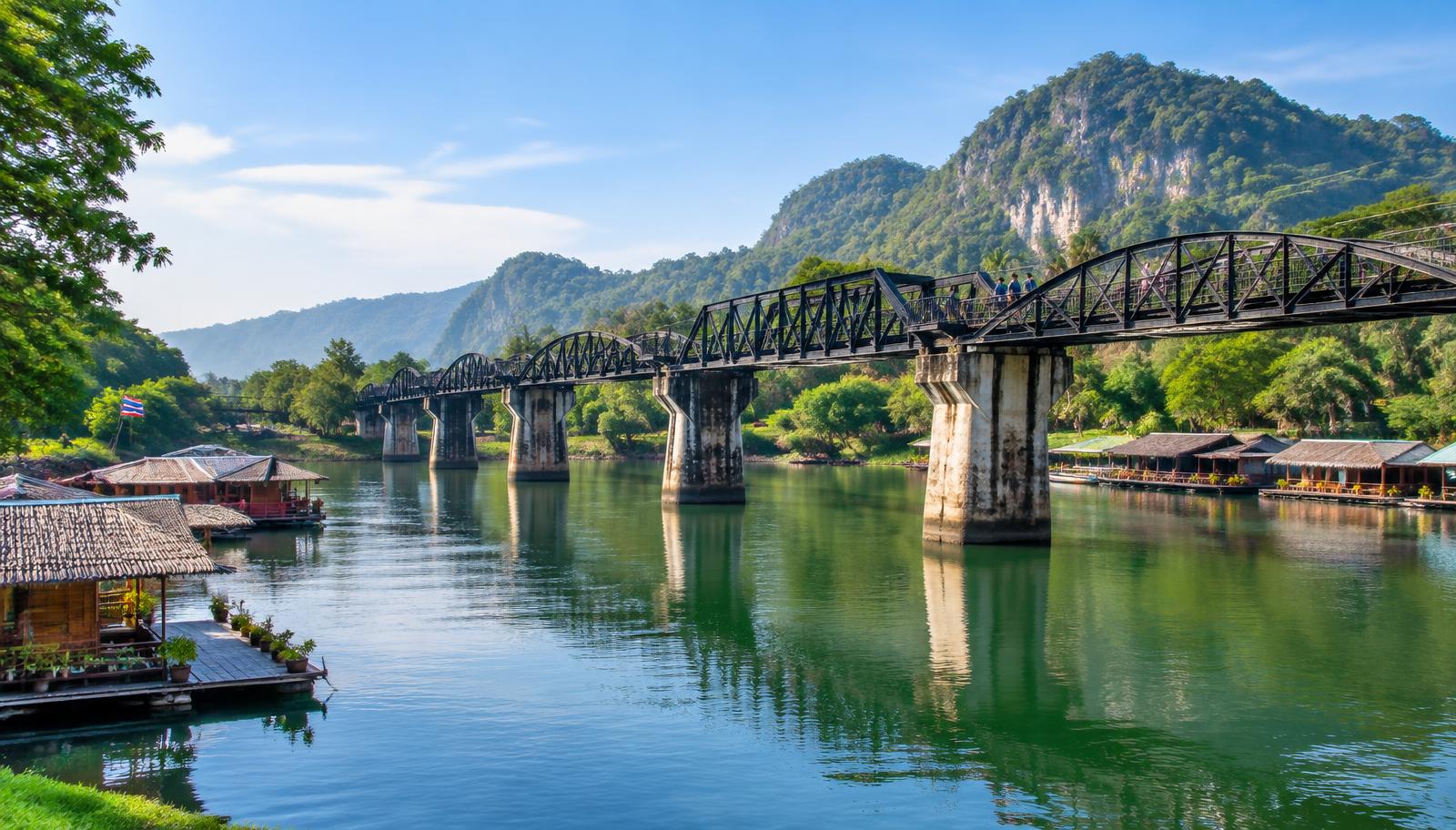
Discover Kanchanaburi, where the River Kwai winds past forested hills, emerald waterfalls and national parks, and where moving World War II history invites quiet reflection alongside unforgettable outdoor adventures.
Discover Kanchanaburi
West of Bangkok, close to the Myanmar border, Kanchanaburi is one of Thailand's most rewarding provinces for travelers who love both history and the outdoors. Its landscape of rivers, limestone hills, forests and waterfalls makes it a refreshing contrast to the capital.
The province is best known for the River Kwai and its World War II history. The Death Railway, built by Allied prisoners of war and conscripted Asian laborers under brutal conditions, is remembered today through museums, cemeteries and memorial sites that are visited with respect.
Beyond its history, Kanchanaburi offers national parks, tiered waterfalls, caves, floating raft stays, scenic train journeys and a relaxed riverside town — making it a great choice for a weekend escape or a longer countryside adventure.
Quick Facts
- West of Bangkok
- ~130 km
- Typical road journey
- 2–3 hrs
- Suggested stay
- 2–4 days
Kanchanaburi is one of Thailand's largest provinces, stretching from the riverside town toward mountain parks near the Myanmar border. Main themes: World War II history, rivers, waterfalls, national parks and relaxed countryside living. Travel times vary with traffic and route.
Places to Explore
Bridge over the River Kwai
The province's best-known landmark, a place to walk, reflect and watch river life, linked to the history of the Death Railway.
Kanchanaburi War Cemetery
A carefully maintained resting place for thousands of Allied prisoners of war — a quiet, moving place for reflection.
Thailand–Burma Railway Centre
An informative museum explaining the construction of the railway and the lives of those who built it.
Erawan National Park
Famous for its seven-tiered waterfall with turquoise pools, forest trails and swimming spots.
Hellfire Pass
A cutting carved through rock by prisoners of war, with a memorial museum and walking trail.
Wang Pho Viaduct
A dramatic stretch of wooden railway trestle clinging to cliffs above the Khwae Noi River.
Sai Yok National Park
Waterfalls, caves and riverside scenery deeper in the province, popular for raft stays and nature walks.
Srinagarind Dam & Lake
A vast reservoir with forested islands, floating accommodation and peaceful views.
Things to Explore
Walk the River Kwai Bridge
Visit early or late in the day for cooler temperatures and softer light along the river.
Ride the Historic Railway
Take a scenic train journey along part of the Death Railway route, passing rivers, fields and the Wang Pho viaduct.
Swim at Erawan Falls
Hike the trail through the tiers of the waterfall and cool off in its clear pools (follow park swimming rules).
Stay on a Floating Raft
Spend a night in raft-house accommodation on the river for a peaceful, nature-focused experience.
Explore Caves & Temples
Discover cave temples and hilltop viewpoints scattered around the countryside.
Kayaking & Bamboo Rafting
Paddle calmer stretches of river or drift gently downstream on a traditional bamboo raft.
Visit War Museums & Memorials
Learn about the region's wartime past at museums, cemeteries and Hellfire Pass.
Cycle the Countryside
Rent a bicycle to explore rice fields, villages and quiet riverside lanes near town.
Planning Your Kanchanaburi Visit
Why Visit Kanchanaburi?
Few Thai destinations combine meaningful history and natural beauty so closely. In one trip you can learn about World War II at respected museums, then spend the next day swimming beneath waterfalls or relaxing on the river.
It is also easy to reach from Bangkok, less crowded than many coastal destinations, and suits couples, families, friends and solo travelers alike.
Nature & Outdoor Adventures
National parks such as Erawan and Sai Yok offer waterfalls, forest trails and caves, while the rivers are ideal for kayaking, bamboo rafting and long-tail boat rides.
Wear sturdy footwear, bring insect repellent and water, and follow park rules and local guidance, especially around water after heavy rain.
History & Culture
During World War II, the Thailand–Burma Railway was built through this region at a terrible human cost to Allied prisoners of war and Asian laborers. Museums, cemeteries and memorials help visitors understand this history.
Visit these sites respectfully — dress modestly, keep voices low and be thoughtful when taking photographs. Local temples and riverside communities also offer a glimpse of everyday Thai culture.
Food & Local Experiences
Enjoy fresh river fish, Thai curries, noodle dishes and grilled snacks at riverside restaurants and evening markets in town.
Floating restaurants and raft houses often serve home-style Thai meals with river views — a relaxing way to end a day of exploring.
Where to Stay
Kanchanaburi town, near the river and bridge, offers guesthouses, boutique hotels and resorts close to restaurants and historical sites.
For a nature-focused stay, consider riverside resorts, floating raft houses or lodges near the national parks further west. Compare options and confirm details directly with properties.
Getting There & Getting Around
Kanchanaburi is reachable from Bangkok by road (private car, van or bus) or by train. Journey times vary with traffic and service, so check current schedules before traveling.
In town, bicycles, motorbikes, tuk-tuks and songthaews are common. For national parks and outlying sights, a private car, organized tour or rented vehicle is usually the most convenient option.
Best Time to Visit
The cooler, drier months from roughly November to February are the most comfortable for sightseeing and hiking. March to May is hot, while the rainy season from about June to October brings lush scenery and fuller waterfalls.
Weekends and Thai holidays can be busier, so plan ahead if visiting at those times.
Filipino Traveler Guide
Filipino passport holders can generally visit Thailand visa-free for short tourist stays, but entry rules can change — confirm current requirements with official sources before booking.
Kanchanaburi is an easy add-on from Bangkok. Bring cash in Thai baht for markets and smaller vendors, use a local SIM or eSIM for navigation, and pack light clothes plus a modest outfit for temples and memorial sites.
Suggested Itineraries
1 day: River Kwai Bridge, War Cemetery and Railway Centre, with a riverside dinner.
2 days: Add Erawan National Park and a swim at the waterfall.
3–4 days: Include a historic train ride, Hellfire Pass, Sai Yok National Park and a night on a floating raft.
Kanchanaburi Travel Tips
Start early to avoid heat and crowds · carry small cash for entrance fees and markets · wear water shoes for waterfalls · respect memorial sites · check weather and park conditions during the rainy season · confirm opening hours and fees locally.
Travel Information: Tour Box provides travel inspiration and general information for planning purposes. Opening hours, transportation, prices, availability, access requirements, and other details can change. Always confirm important information directly with the relevant venue, operator, or authority before traveling.
Explore More Thailand
Bangkok
Thailand's energetic capital
Explore Bangkok →Pattaya
Sun. Sea. Endless Adventure.
Explore Pattaya →Chiang Mai
Culture and mountains in the north
Explore Chiang Mai →Phuket
Island Life. Endless Possibilities.
Explore Phuket →Krabi
Where Limestone Cliffs Meet the Andaman Sea
Explore Krabi →Koh Samui
Palm-Fringed Beaches, Temples & Island Adventures
Explore Koh Samui →Ayutthaya
Ancient Wonders. Timeless Stories.
Explore Ayutthaya →Chiang Rai
Temples, Mountains & Northern Heritage
Explore Chiang Rai →Hua Hin
Beachside Calm. Timeless Charm.
Explore Hua Hin →