
Destination Introduction
Ayutthaya: A First Look at Thailand's Ancient Capital
Weathered temple ruins, royal chedis, riverside communities and centuries of history come together in Ayutthaya. Just north of Bangkok, Thailand's former capital offers first-time visitors a rewarding journey into the story of the Kingdom of Siam.
10 min read
Introduction
For more than four hundred years, Ayutthaya was the capital of the Kingdom of Siam. Today, its temple ruins, royal monasteries and riverside setting offer one of the most atmospheric introductions to Thailand's history.
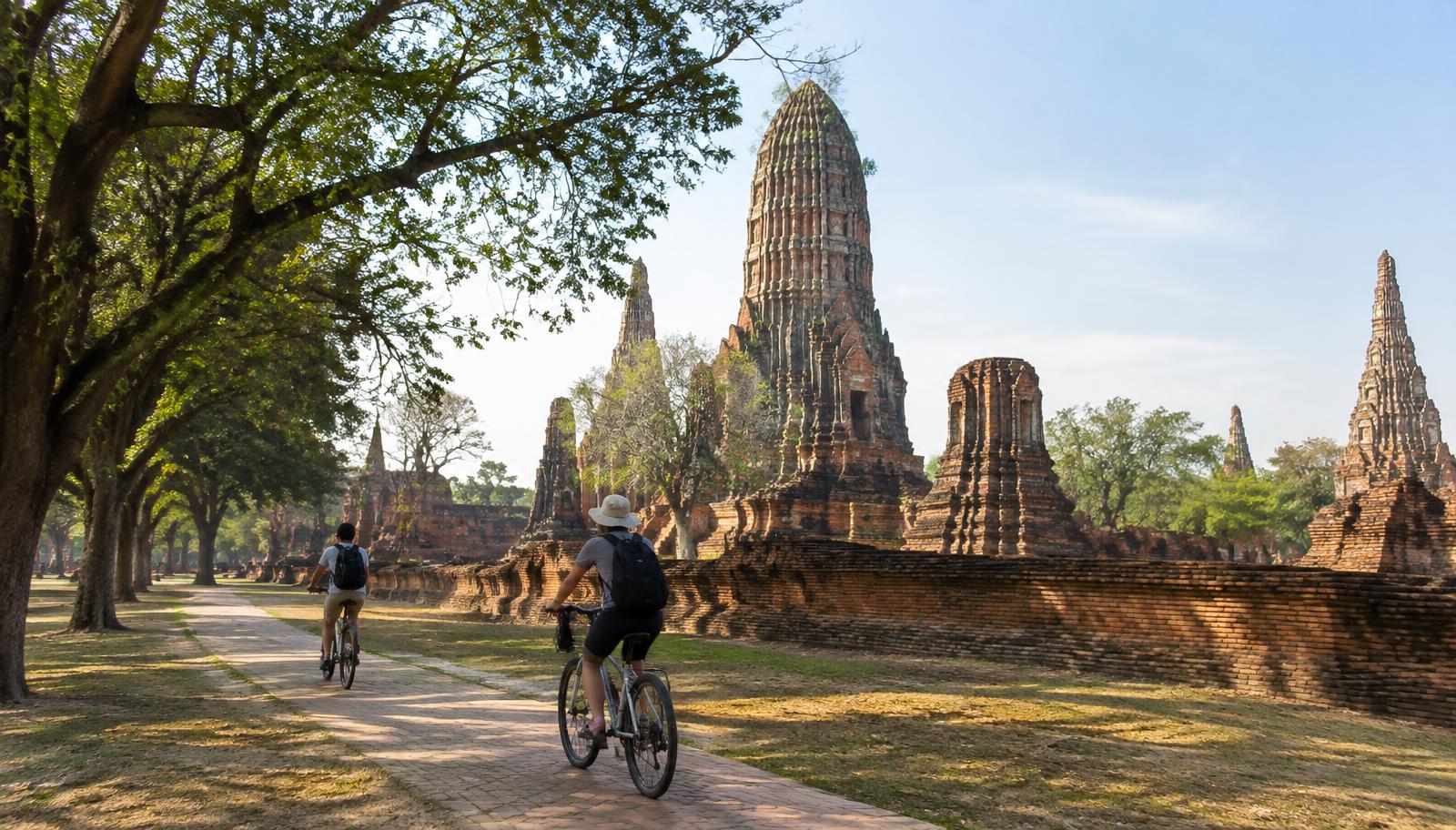
Unlike Thailand's beach resorts or its modern cities, Ayutthaya invites you to slow down and imagine the past. Brick prangs rise above green lawns, rows of Buddha images line ancient courtyards, and the rivers that once carried traders from across Asia still flow around the city.
At the same time, Ayutthaya is a living town, with markets, local restaurants and everyday life happening alongside its historic landmarks. That combination of heritage and daily life is what makes a first visit so memorable.
A Glimpse Into Ayutthaya's History
Ayutthaya was founded in the 14th century on an island formed by the Chao Phraya, Pa Sak and Lopburi rivers. Its location made it easy to defend and ideal for trade.
Over the following centuries, the city grew into one of the largest and most cosmopolitan in the region. Merchants and envoys from China, Japan, Persia, India and Europe visited, and foreign communities settled along the riverbanks.
In 1767, the city was sacked and largely destroyed during a war with Burmese forces. The capital later moved south, eventually to Bangkok, but the ruins left behind still reveal the scale and ambition of the old kingdom.
Ayutthaya Historical Park
The Ayutthaya Historical Park protects the remains of the old capital and is recognized as a UNESCO World Heritage Site. It is not a single enclosed attraction but a collection of temples, monasteries and royal sites spread across the city island and beyond.
Some ruins stand in open parkland, while others sit beside roads, canals and neighborhoods. Moving between them is part of the experience, giving you a sense of how large and complex the city once was.
Most major temples have their own entrance points, and many visitors plan a route that links several key sites in a morning or afternoon.
Wat Mahathat
Wat Mahathat is one of Ayutthaya's most important and recognizable temples. Once a major religious center, it now features rows of ruined chedis, weathered walls and headless Buddha images that hint at its former grandeur.
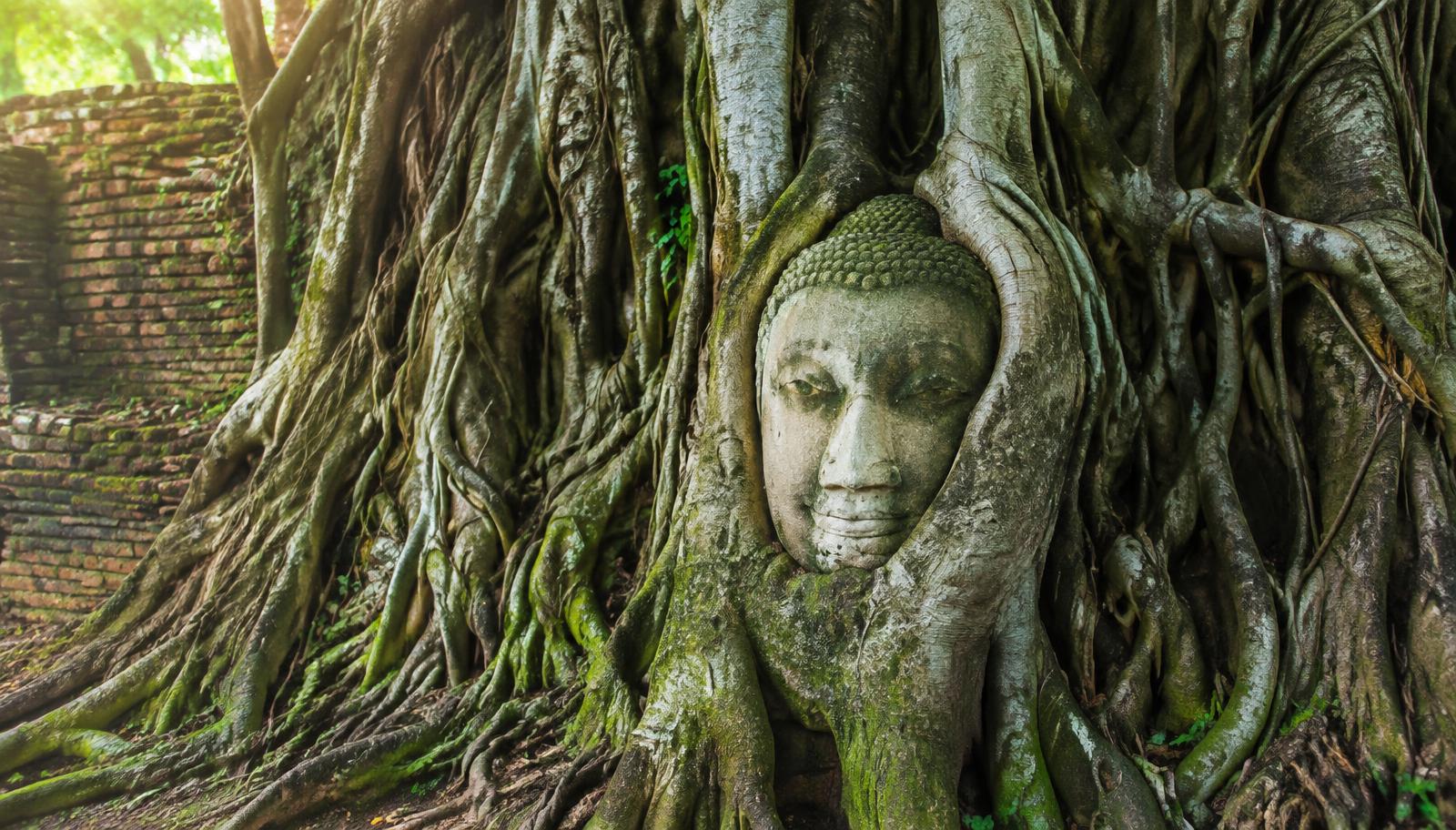
Its most famous sight is a sandstone Buddha head embraced by the roots of a tree, an image that has become a symbol of Ayutthaya. Visitors are asked to show respect here — when taking photos, crouch or stand so that you are not positioned higher than the head.
Wat Phra Si Sanphet
Wat Phra Si Sanphet was the royal temple within the grounds of the former Grand Palace. Rather than housing monks, it was used for royal ceremonies.
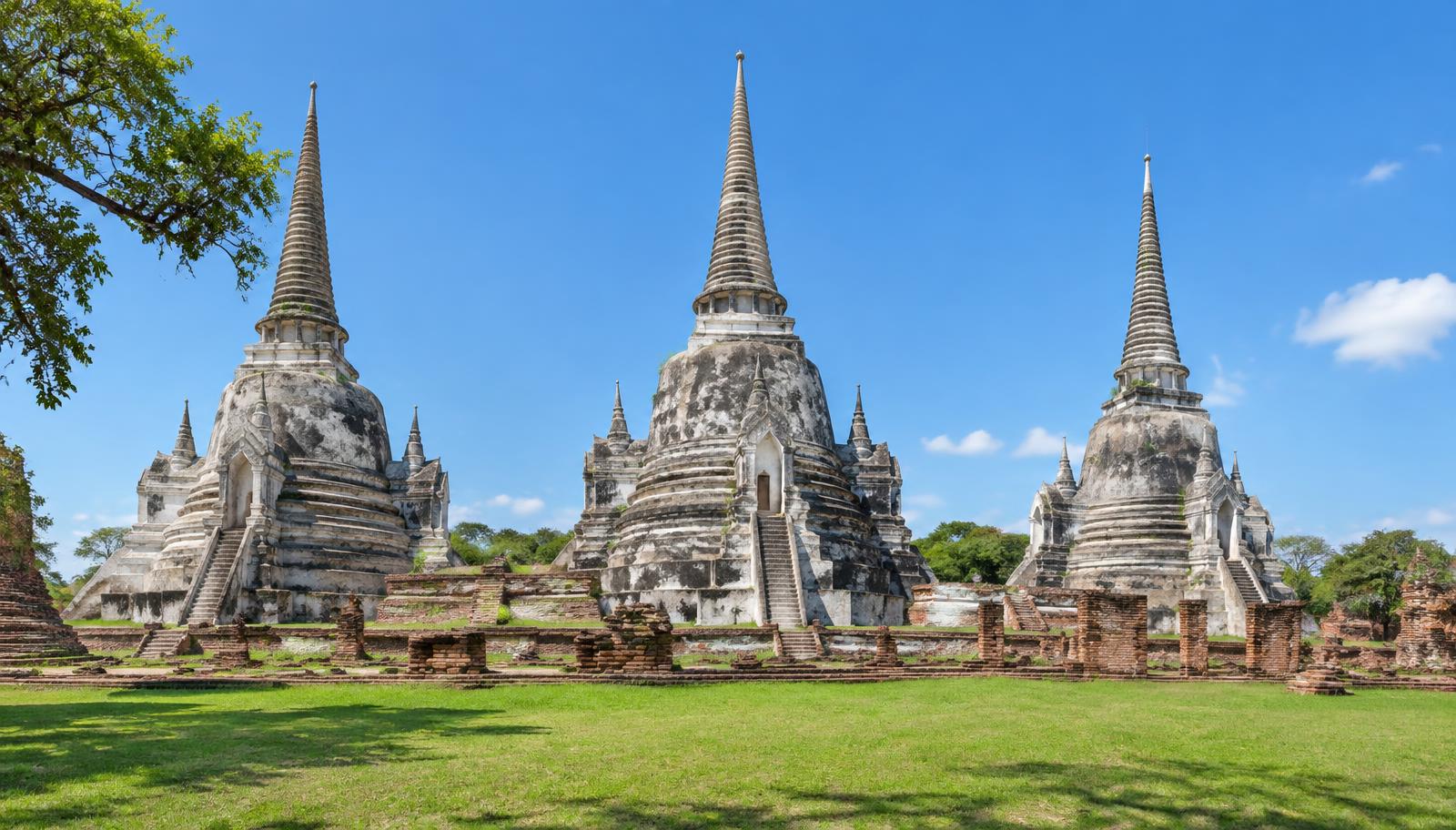
Its three large bell-shaped chedis, standing in a line, are among the most photographed structures in Ayutthaya. They are believed to hold the remains of Ayutthaya kings and remain an impressive reminder of the city's royal past.
Wat Chaiwatthanaram
Set on the west bank of the Chao Phraya, just outside the city island, Wat Chaiwatthanaram is one of Ayutthaya's most striking temples. Its tall central prang, surrounded by smaller towers, reflects Khmer architectural influence.
The temple is especially atmospheric in the late afternoon, when warm light falls on its brickwork and the riverside setting becomes calm and golden. Many visitors plan to arrive here toward the end of their day.
Wat Yai Chai Mongkhon
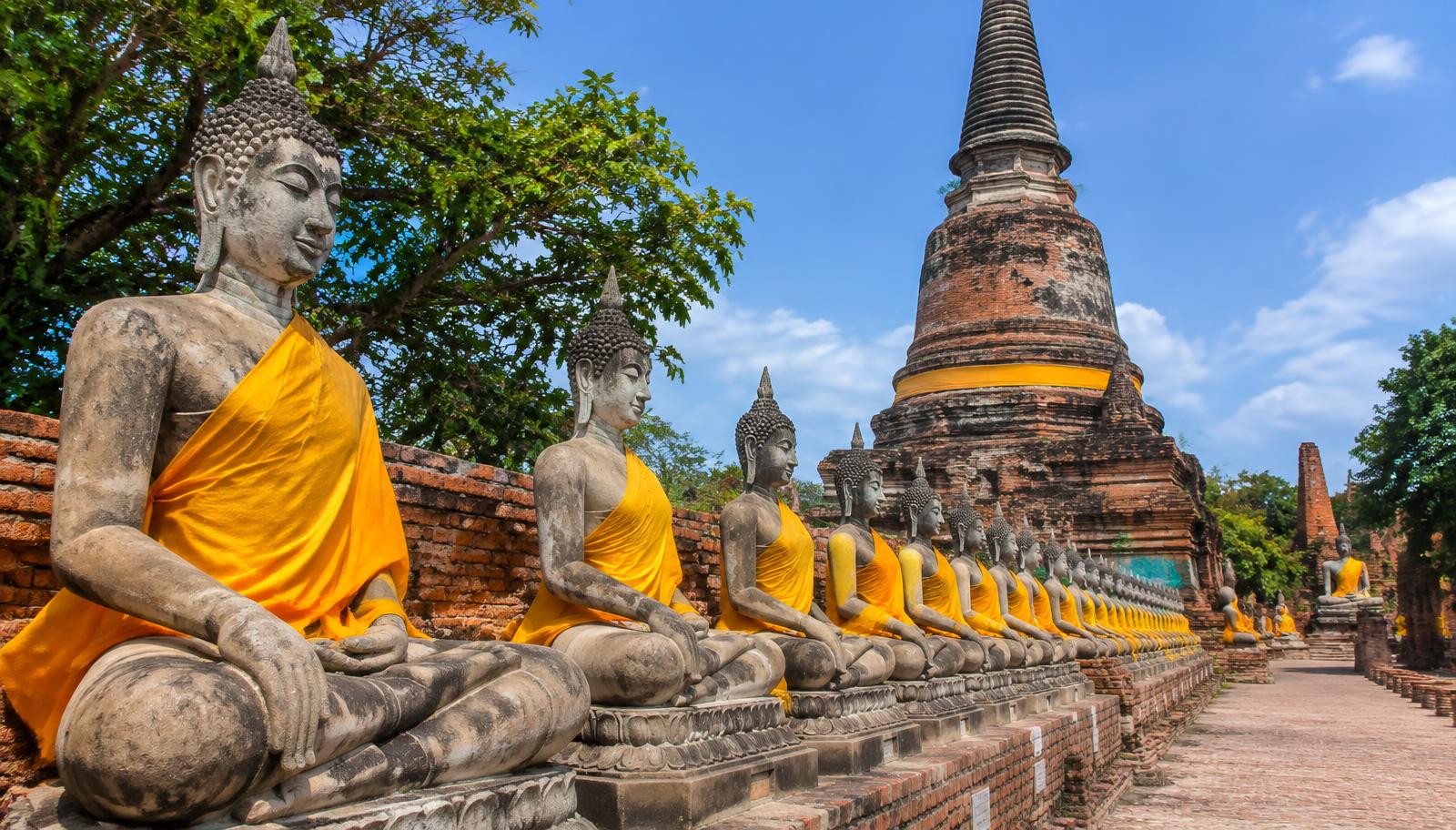
Located southeast of the city island, Wat Yai Chai Mongkhon is still an active temple. Its large chedi can be climbed for views over the grounds, and long rows of seated Buddha images draped in saffron cloth line the courtyard.
A large reclining Buddha is another highlight. As an active place of worship, it is a good reminder to dress modestly and move quietly during your visit.
Beyond the Famous Temples
Wat Ratchaburana, near Wat Mahathat, is known for its well-preserved central prang. Its crypt once held gold objects and other treasures, some of which are now displayed in museums.
Wat Phanan Choeng, beside the river, houses a large seated Buddha image and is busy with worshippers from both Thai and Chinese communities. The Chao Sam Phraya National Museum displays artifacts from Ayutthaya's temples and helps bring the ruins to life.
If you have extra time, areas once home to foreign trading communities and smaller temples scattered around the island reveal quieter sides of the city.
Life Along the Rivers
Rivers have always shaped Ayutthaya. They protected the old capital, supported its trade and connected it with the Gulf of Thailand.
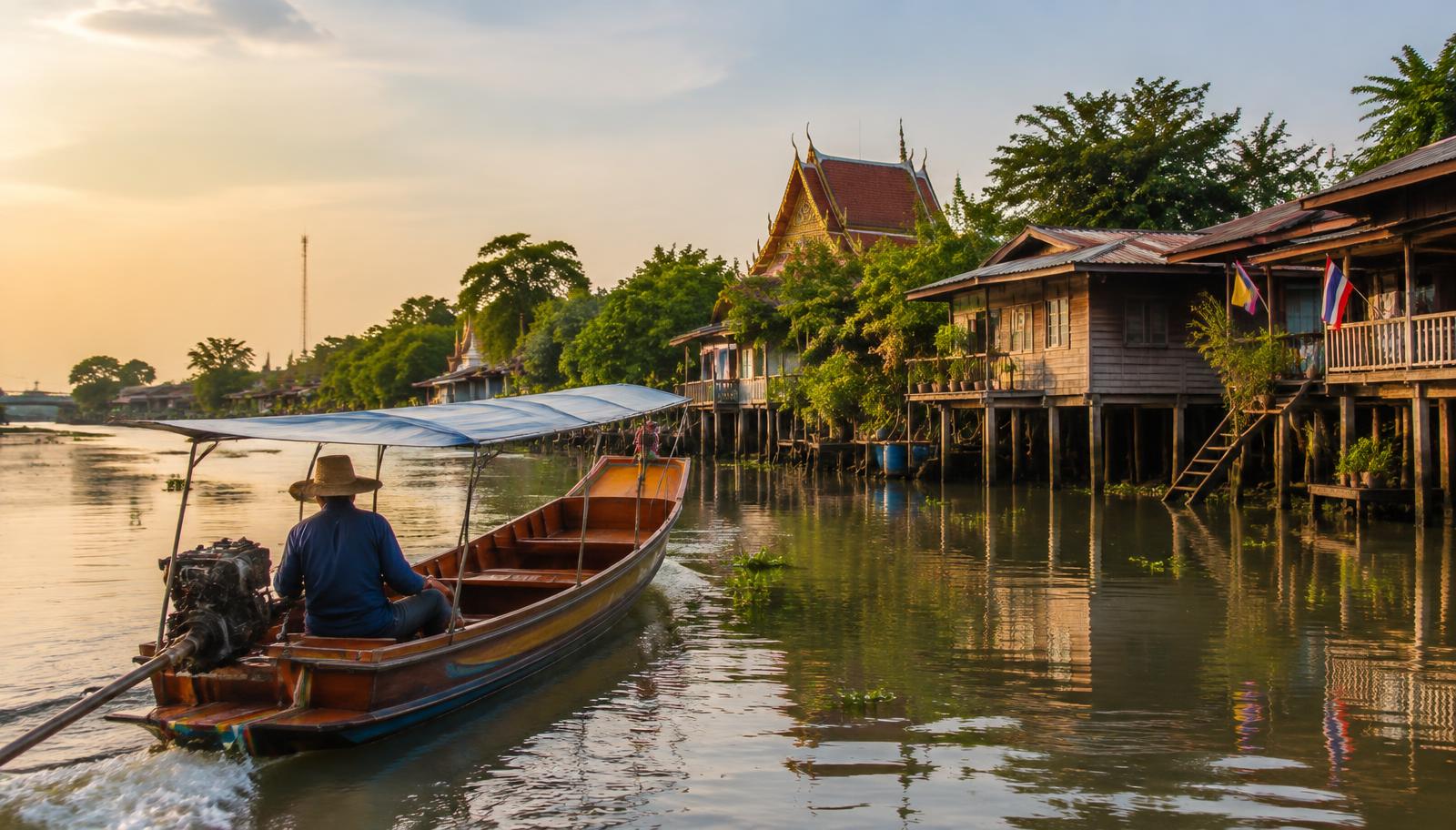
Today, riverside homes, temples and restaurants still line the water. A boat trip around the city island is a relaxing way to see several temples from a different perspective and to glimpse daily life along the banks.
Evening can be a particularly pleasant time on the water, as temperatures ease and the light softens.
Ayutthaya's Local Food
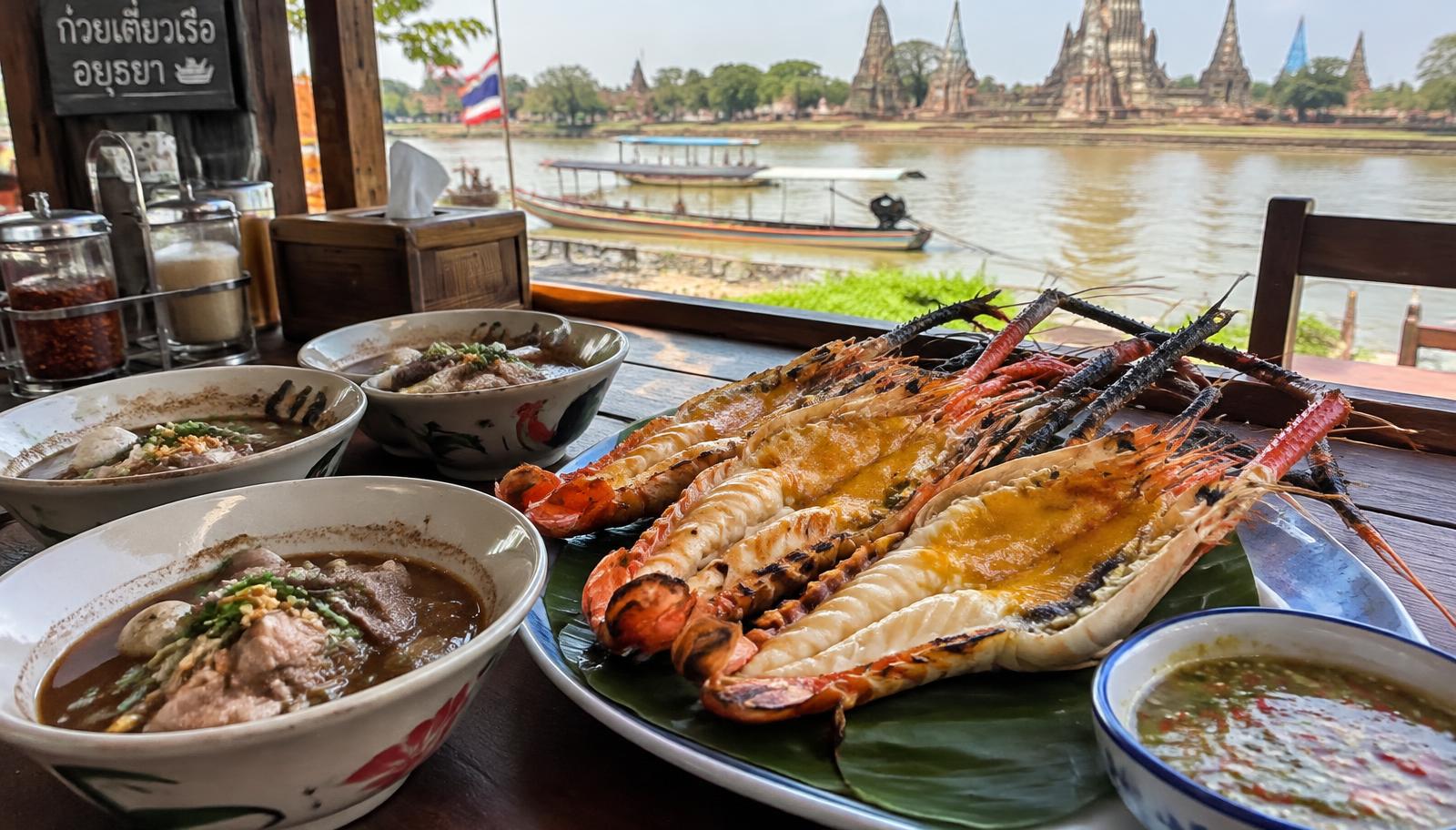
Ayutthaya is closely associated with boat noodles, small bowls of richly flavored noodle soup traditionally sold from boats. Many visitors order several bowls to try different toppings.
The city's riverside restaurants are also known for grilled river prawns, often served with a spicy seafood dipping sauce. Another local favorite is roti sai mai, thin crepes wrapped around colorful strands of spun sugar.
Local markets offer a chance to try Thai street food, snacks and fresh fruit alongside residents.
Exploring Ayutthaya
Several major temples on the city island are close enough to explore on foot, though the heat can make longer walks tiring.
Bicycles are a popular way to move between sites at your own pace. Tuk-tuks can be hired for a few hours — agree the route and price before setting off. Private cars or transfers suit families and travelers visiting temples outside the island.
Combining transport options, such as cycling in the morning and taking a boat trip later, can make the day more comfortable.
Ayutthaya as a Bangkok Day Trip
Ayutthaya lies roughly 80 kilometers north of Bangkok, which makes it one of the most popular day trips from the capital. Travelers can arrive by train, road transfer, bus or minivan, or join an organized excursion.
A day trip is enough to see the main highlights. An overnight stay, however, lets you visit temples in the cooler early morning and late afternoon, enjoy dinner by the river and explore at a more relaxed pace.
When to Visit
The cooler, drier months from around November to February are generally the most comfortable for sightseeing. March to May can be very hot, while the rainy season, roughly June to October, brings showers but greener surroundings.
Whatever the season, starting early and planning a break during the hottest part of the day will make exploring more enjoyable.
First-Time Tips
Wear light, breathable clothing that covers your shoulders and knees, along with comfortable walking shoes. Bring a hat, sunscreen and plenty of water.
Treat ruins and Buddha images with respect: do not climb on them, and avoid poses that could be considered disrespectful. Follow signs protecting fragile structures.
Plan your route in advance to reduce time spent in the heat, carry some cash for entrance fees and small purchases, and check current opening hours locally.
Why Ayutthaya Is Worth Discovering
Ayutthaya offers something different from Thailand's modern cities and beach destinations. Its ruins tell the story of a powerful kingdom, while its rivers, food and everyday life keep the city grounded in the present.
Whether you visit for a day or stay longer, Ayutthaya rewards curiosity — and gives first-time visitors a deeper understanding of Thailand's past.