
Getting Around
Getting Around Thailand: Trains, Taxis, Ride-Hailing & More
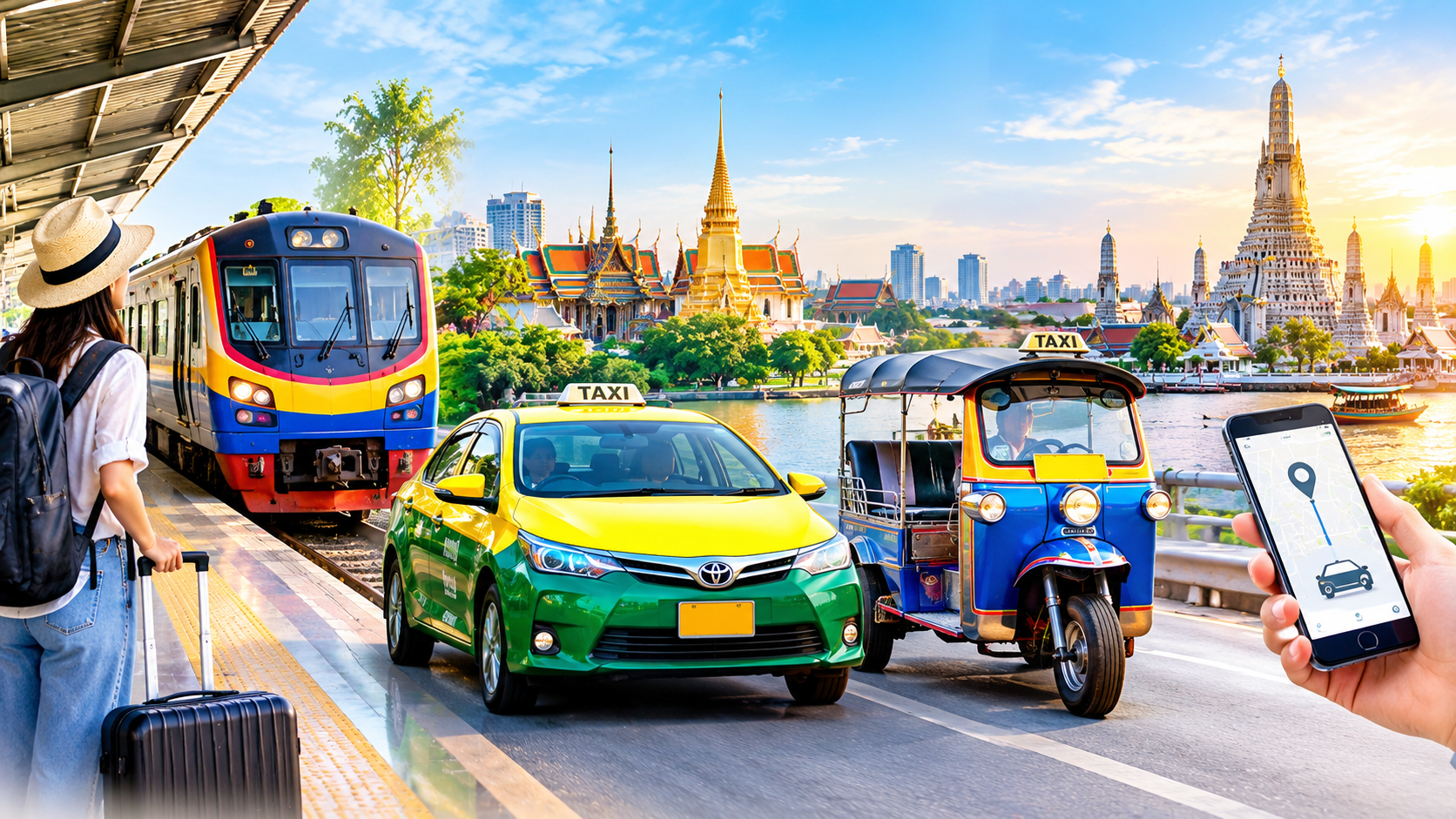
Thailand is easy to navigate once you know your options. Transport is affordable, widely available, and often part of the adventure. From the air-conditioned Skytrains of Bangkok to the colorful songthaews of Chiang Mai, from overnight sleeper trains rolling through the countryside to ferries carrying you to palm-fringed islands, there's a ride for every route and every budget. Each option has its own quirks, though, and knowing a few basics can save you time, money, and stress. Here's how to get from A to B, whether you're stuck in Bangkok traffic, planning a northern road trip, or heading to a remote island.
1. Ride-Hailing Apps (Grab and Bolt)
For most visitors, ride-hailing is the simplest option in big cities and tourist areas. Grab is the most widely used, and Bolt is often a cheaper alternative. You see the fare before you book, there's no haggling, and the driver's route is tracked. Both apps work in Bangkok, Chiang Mai, Phuket, Pattaya and other major hubs. Set up payment in advance, and have a local data plan or eSIM ready.
2. Taxis
Bangkok's metered taxis are plentiful and affordable. Insist on the meter ("meter, please"), and politely get out if the driver refuses. Carry small bills, since drivers don't always have change. Airport taxis add a small surcharge, and you pay any expressway tolls yourself. In tourist areas like Phuket, taxis are often fixed-price and noticeably more expensive, so compare with a ride-hailing app first.
3. Tuk-Tuks and Songthaews
Tuk-tuks are more of an experience than a bargain. Agree on the price before you climb in, and be wary of drivers offering "cheap tours." Songthaews (pickup trucks with two bench seats) are the shared taxis of Chiang Mai, Phuket and many smaller towns. Fares are low, but confirm the price and destination first, since some are shared and others are chartered.
4. BTS, MRT and Airport Rail Link
In Bangkok, the BTS Skytrain, MRT subway and Airport Rail Link are the best ways to beat the traffic. They're clean, air-conditioned and easy to read in English. The Airport Rail Link connects Suvarnabhumi Airport to the city centre. Buy single-journey tickets from machines, or look into a rechargeable card if you'll be riding often. Avoid rush hours (roughly 7:30 to 9:30 am and 5 to 7 pm) if you can.
5. Intercity Trains
Thailand's State Railway is slow but scenic and great value. The overnight sleeper train from Bangkok to Chiang Mai is a classic: you save a night's accommodation and wake up to mountain views. Second-class sleepers are the sweet spot for comfort and price. Book early during peak season (November to February) through the official SRT channels or a reputable booking platform. Trains also run south toward Surat Thani, Hat Yai and beyond, as well as to the northeast.
6. Buses and Minivans
Long-distance buses cover almost every corner of the country. VIP and first-class coaches have reclining seats, air conditioning and sometimes snacks, and they're good for overnight journeys. Minivans are quicker and cheaper but more cramped, so skip them if you get carsick or have a lot of luggage. Bring a light jacket, because the air conditioning can be freezing.
7. Domestic Flights
Budget airlines make it easy to hop between Bangkok, Chiang Mai, Phuket, Krabi and Koh Samui in about an hour or so. Compare the total cost, including baggage fees and airport transfers, against the train or bus, especially for overnight routes. Book early for holidays and weekends.
8. Boats and Ferries
For the islands, ferries and speedboats are your lifeline. Check schedules the day before, since weather and sea conditions can cause cancellations, especially in the rainy season. In Bangkok, the Chao Phraya Express Boat is a cheap, scenic way to reach temples and riverside sights.
9. Renting a Motorbike or Car
Motorbikes are popular on islands and in the north, but they're also a leading cause of tourist injuries. Only ride if you're experienced, wear a helmet, carry the right licence, and make sure your travel insurance covers it. Always photograph the bike before you rent it to avoid damage disputes. Cars are better for road trips outside the cities, and Thais drive on the left.
10. Quick Tips
- Carry cash for songthaews, local buses and small vendors.
- Download offline maps and have your hotel name written in Thai.
- Check the meter or the app price before you commit.
- Allow extra time in Bangkok, where traffic is unpredictable.
- Book popular trains and ferries early during high season.
Final Takeaway
Whichever way you travel, a little preparation goes a long way, and so does a friendly smile. Safe travels!
Prices and routes change, so confirm current fares and schedules before you go.