
Getting Connected
SIM vs eSIM in Thailand: Which Is Better for Your Trip?
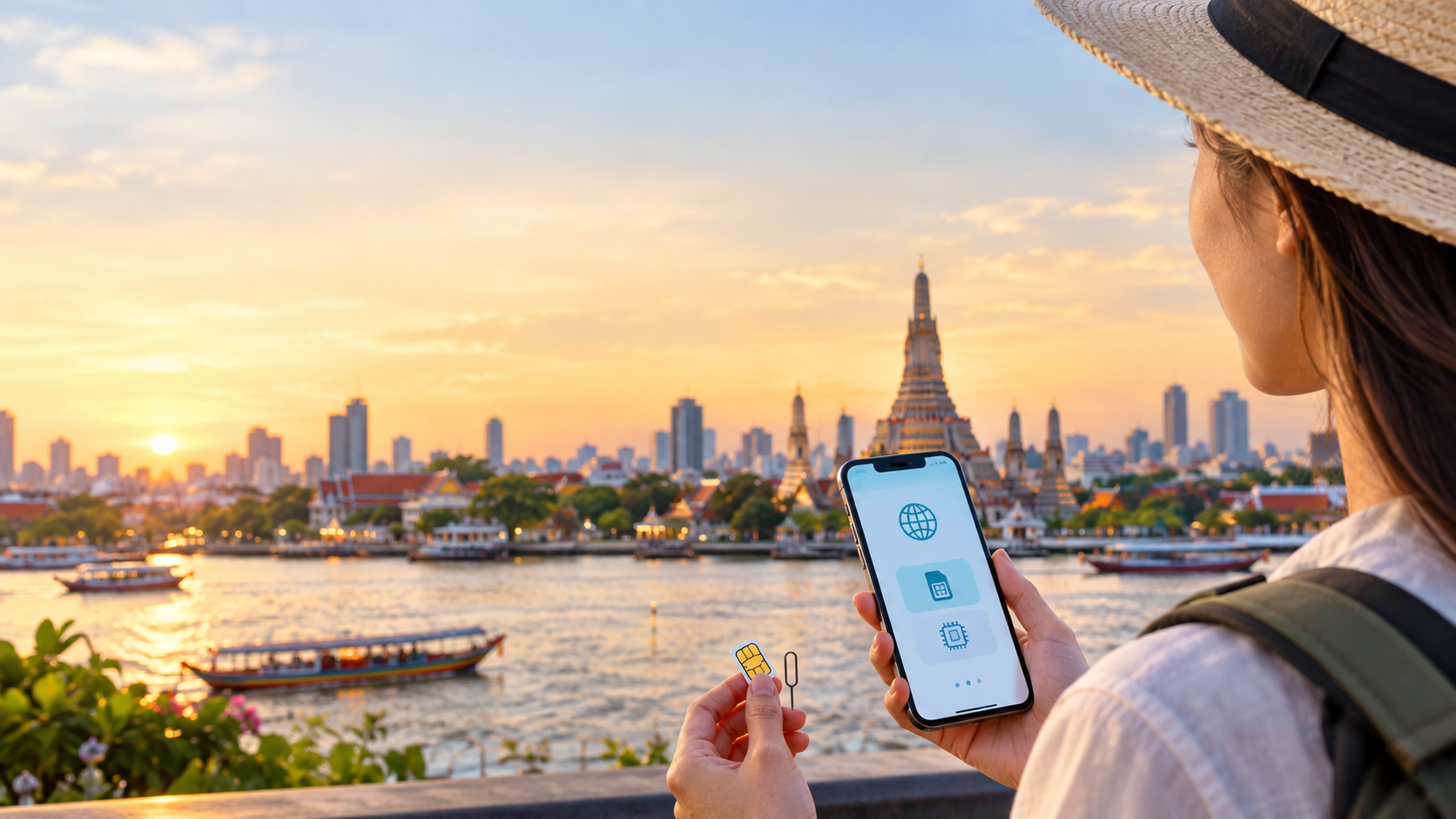
Staying connected in Thailand matters more than you might think. You'll use data for Google Maps, Grab rides, translation apps, booking ferries and keeping in touch with home. The big question is whether to buy a physical SIM card or install an eSIM before you fly. Here's how they compare, so you can choose in minutes.
1. The Short Answer
- Choose an eSIM if your phone supports it and you want to land connected, with no queues and no SIM swapping.
- Choose a local SIM if you want the cheapest heavy-data deal, need a Thai phone number, or your phone doesn't support eSIM.
2. Thailand's Mobile Networks
Thailand has three main operators: AIS, TrueMove H and dtac. AIS is the largest and is generally rated best for coverage. TrueMove H and dtac merged under True Corporation and now share much of the same network, so choosing between them makes little difference in signal. Most travel eSIM brands you'll see online (Airalo, Saily, Nomad and others) simply resell data on these same three networks. Switching brands changes the price and plan, not the towers your phone connects to.
3. Option 1: Physical Tourist SIM
HOW IT WORKS:
Buy a tourist SIM from AIS, TrueMove H or dtac, swap it into your phone and activate it.
COST: Tourist SIMs bought at a 7-Eleven or a carrier shop in town typically cost around 299-599 THB for 30 days.
Airport counters often charge more. A 30-day unlimited AIS plan at the airport has been around 1,199 THB.
PROS:
1. Usually the cheapest option for heavy data use.
2. Often includes a Thai phone number, handy for restaurants, tour operators and hotels.
3. Easy to top up at convenience stores
CONS:
- You'll need your passport for mandatory ID registration.
- Queues at the airport after a long flight.
- You must remove your home SIM, so you may miss calls or SMS codes (such as bank verification texts) unless your phone is dual SIM
- Some data-only tourist SIMs have voice disabled.
Money-saving tip: Skip the arrival-hall kiosks if you can. The same SIMs are often 30-50% cheaper at 7-Eleven or an AIS/True shop in town.
4. Option 2: Travel eSIM
HOW IT WORKS: You buy a plan online, scan a QR code (or install through an app) and activate it.
Most people do this at home before departure, so you land with data already working.
COST: Prices vary by provider and data size. As a rough guide, 20 GB over 30 days is commonly in the US$16-20 range, with smaller plans starting around US$3-5 for short stays.
PROS:
1. Connected the moment you land, with no queues.
2. Keep your home SIM active for calls and texts (on dual-SIM or eSIM-capable phones).
3. Easy to compare plans and prices online.
4. No passport registration at a shop counter.
CONS:
- Your phone must be eSIM-compatible and carrier-unlocked.
- Usually data-only, with no Thai number for calls.
- Can cost more than a local SIM for very heavy or long-term use.
5. Which Should You Choose?
Short trip (3-10 days), eSIM-compatible phone: Go with an eSIM. The small extra cost is worth the convenience.
Long stay (2+ weeks) or heavy data user: A local SIM bought in town will usually be the best value.
Need a Thai number: Choose a physical SIM, or a tourist eSIM from AIS, dtac or TrueMove H that includes one.
Older or locked phone: Stick with a physical SIM.
Travelling as a couple or group: Consider one hotspot-friendly plan, but check that the plan allows tethering.
6. Practical Tips
1. Check your phone first. Look under Settings > Mobile Data/SIM for an "Add eSIM" option, and make sure the phone is unlocked.
2. Install the eSIM before you fly, but activate it only when you land, so the validity period doesn't start early.
3. Turn off data roaming on your home SIM to avoid surprise charges.
4. Label your lines (for example "Home" and "Thailand") so you don't mix them up.
5. Choose the right data size. Maps, messaging and social media use far less than video streaming. A week of typical tourist use is often well under 10 GB.
6. Expect the best signal in cities and tourist areas. Bangkok, Chiang Mai, Phuket and Koh Samui are well covered, while remote islands and mountain areas can be patchy on any network.
7. Bring your passport if buying a physical SIM, as registration is required.
7. The Bottom Line
For most travellers on a short holiday, an eSIM is the easiest and most stress-free choice. For longer stays, heavy data use or anyone who wants a Thai number, a local SIM from AIS, TrueMove H or dtac is hard to beat on price. Either way, you'll be connected on all three of Thailand's major networks, so the best option is the one that fits your phone and your trip.
Prices and plans change often, so always check the provider's current rates before you buy.