
Getting Connected
How to Stay Connected While Traveling in Thailand
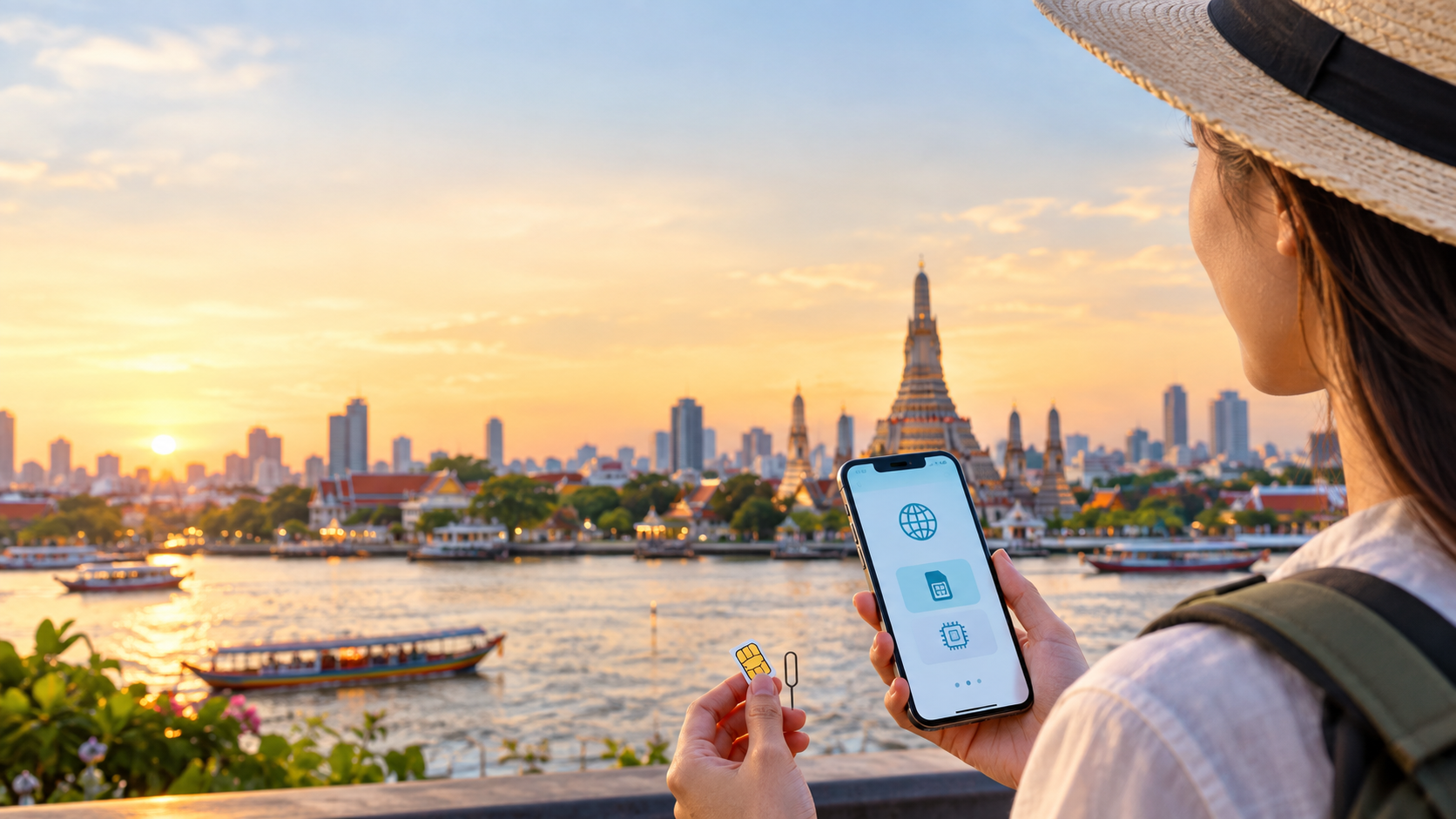
Whether you're posting beach photos from Krabi, navigating Bangkok's BTS, or booking a ride on the fly, a reliable connection makes travel in Thailand much easier. Thailand is one of the easiest countries in Southeast Asia to get online in, with fast mobile networks, cheap data, and plenty of options. Here's how to choose the right one.
1. Tourist SIM Cards
The classic option, and still a great one. Thailand's major carriers (AIS, TrueMove H, and dtac) all sell tourist SIMs with generous data and short validity periods, usually 7 to 30 days.
Where to buy:
- Airport counters at Suvarnabhumi (BKK), Don Mueang (DMK), Phuket, and Chiang Mai
- Official carrier stores in malls
- 7-Eleven and other convenience stores
1. Bring your passport. Registration is required. 2. Airport prices are slightly higher, but the convenience is hard to beat after a long flight. 3. Check that your phone is unlocked before you leave home.
2. eSIMs
If your phone supports eSIM, you can buy and install a plan before you even board your flight. No counters, no queues, no tiny SIM tray tools.
PROS: instant setup, no physical swapping, and you can keep your home SIM active for calls and verification texts.
CONS: not every phone is compatible, and some plans are data-only with no Thai phone number.
3. International Roaming
Roaming is the easiest option, but usually the most expensive. Daily roaming passes from home carriers can cost many times more than a local SIM. It's fine for a quick layover or short stay, but for anything longer, a local SIM or eSIM saves real money. Always confirm your carrier's current rates before you leave.
4. Free Wi-Fi
Free Wi-Fi is common across Thailand:
- Hotels, hostels, and guesthouses
- Cafés and restaurants
- Shopping malls
- Airports and major train stations
Speeds are usually good in cities and can be patchy on smaller islands and in rural areas. Public Wi-Fi isn't always secure, so avoid banking or entering passwords on open networks unless you're using a VPN.
5. Pocket Wi-Fi Devices
A portable Wi-Fi router is a handy choice for families and groups. One device can connect several phones and laptops at once. You can rent one at the airport or reserve one online. The downside is carrying one more device and keeping it charged.
6. Handy Tips
- Download offline maps. Save areas on Google Maps before you go, in case signal drops on islands or in mountains.
- Install key apps in advance. Grab ride-hailing, translation, and messaging apps before you arrive.
- Carry a power bank. Navigation, photos, and maps drain batteries fast.
- Keep your home number reachable. If you use a Thai SIM in your only SIM slot, remember your bank's SMS codes may not reach you. Dual-SIM or eSIM setups solve this.
- Check coverage for your route. Major cities and tourist areas have excellent 4G and 5G, but remote national parks and some islands can be spotty.
Final Takeaway
Staying connected in Thailand is simple and affordable. For most travelers, a tourist SIM or eSIM gives the best mix of price and convenience. Pick the option that fits your trip, set it up before you head out exploring, and you'll be ready to navigate, translate, book, and share every moment.