
Money & Budget
How Much Should You Budget for a Thailand Trip?
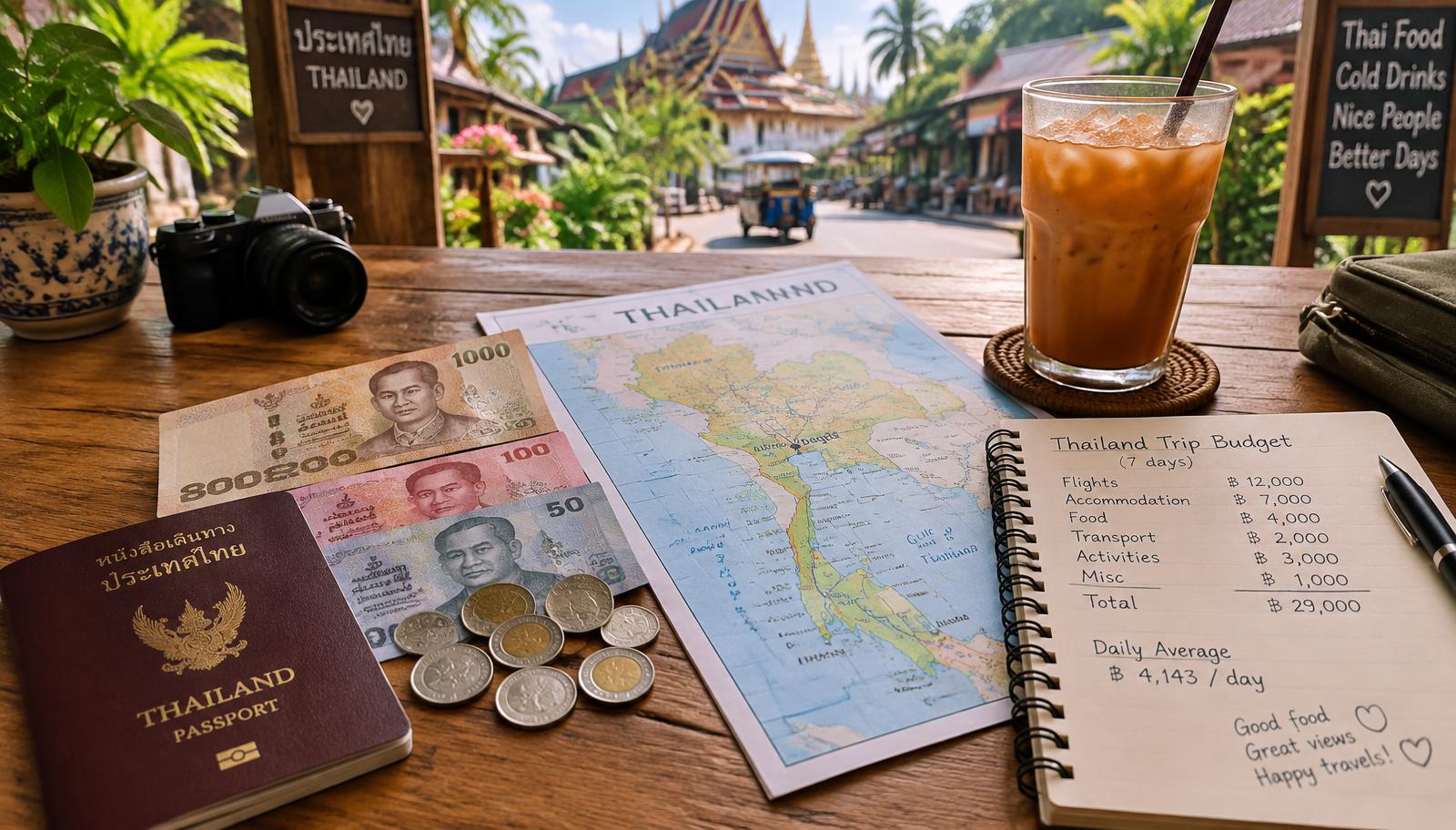
Thailand can work for a wide range of travel budgets, from simple backpacking trips and affordable local stays to comfortable holidays with better hotels, private transportation and more activities.
The amount you need depends on where you go, how long you stay, your accommodation choices, how you eat and how often you move between destinations.
This guide provides a practical starting point for planning your Thailand travel budget.
1. Thailand Travel Budget at a Glance
The ranges below are indicative daily spending estimates for one traveler. They are meant for planning purposes, not fixed prices — actual costs depend on your destinations, the season and your personal choices.
| Travel Style | Suggested Daily Budget |
|---|---|
| Budget | ฿1,000–฿1,800 |
| Mid-Range | ฿2,000–฿4,000 |
| Comfortable | ฿4,500–฿8,000+ |
These estimates generally cover accommodation, food, local transportation and typical sightseeing. International flights, major shopping, nightlife splurges and expensive private tours can add substantially to the total.
2. Traveling Thailand on a Budget
Thailand is well suited to travelers who want to keep costs low. Most of the savings come from a handful of simple choices:
- Staying in guesthouses, hostels and simple hotels
- Eating at local restaurants and food markets
- Using public transportation
- Choosing shared transfers over private ones
- Enjoying free or low-cost attractions
- Making fewer destination changes
- Booking accommodation outside the most expensive tourist areas
| Expense | Indicative Daily Cost |
|---|---|
| Accommodation | ฿300–฿800 |
| Food | ฿250–฿500 |
| Local transportation | ฿100–฿300 |
| Activities | ฿100–฿300 |
| Miscellaneous | ฿100–฿200 |
Prices vary by destination and season. Popular beach areas and peak travel periods usually cost more than smaller towns and quieter months.
3. A Comfortable Mid-Range Thailand Trip
With a mid-range budget, travelers can generally expect:
- Comfortable hotels or well-rated guesthouses
- A mix of local food and sit-down restaurants
- Taxis or ride-hailing when convenient
- Domestic transportation between destinations
- Paid attractions and occasional tours
| Expense | Indicative Daily Cost |
|---|---|
| Accommodation | ฿1,000–฿2,000 |
| Food | ฿500–฿1,000 |
| Transportation | ฿200–฿500 |
| Activities | ฿300–฿700 |
| Miscellaneous | ฿200–฿400 |
4. Traveling Thailand in Comfort
A higher budget gives you more choice and flexibility, including:
- Better hotels and resorts
- More restaurant choices
- Private transfers
- Domestic flights
- Guided tours
- Boat trips and premium experiences
- More flexibility with activities
As a planning guide, comfortable travelers might spend around ฿4,500–฿8,000+ per person per day.
Luxury resorts, private tours, premium dining and high-end experiences can push the budget considerably higher.
5. How Much Should You Budget for Accommodation?
Accommodation is usually the biggest single daily expense, and prices vary significantly according to:
- Destination
- Location within a city or island
- Season
- Hotel category
- Room type
- Booking timing
Hostels and budget guesthouses are the lowest-cost option and are common in most tourist areas. Simple 2–3 star hotels add more privacy and comfort for a modest increase. Mid-range hotels typically offer better locations, pools and breakfast, while resorts and higher-end hotels can cost several times more.
Bangkok, Phuket, Koh Samui and other major tourist destinations can have substantially different accommodation costs from smaller cities and less-touristed areas. Compare several options for your dates rather than relying on a single price.
6. How Much Does Food Cost in Thailand?
Food can be one of the most flexible parts of a Thailand travel budget. You can eat very well for little money — or spend much more if you prefer.
- Local markets and street food: often the most affordable way to eat
- Food courts: inexpensive, clean and convenient, especially in malls
- Casual restaurants: a good middle ground for sit-down meals
- International restaurants: generally cost more than Thai dishes
- Upscale dining: can cost as much as a night's accommodation or more
Travelers who regularly eat local food can generally spend less than those who mainly choose international restaurants, hotel restaurants or fine dining. For example, a simple noodle or rice dish from a local stall usually costs a fraction of a similar meal in a hotel restaurant.
7. Budgeting for Transportation
Thailand has transport options for every budget:
- Bangkok BTS Skytrain and MRT
- Local buses
- Taxis and ride-hailing apps
- Tuk-tuks (agree on the fare first)
- Intercity buses
- Trains
- Ferries to the islands
- Domestic flights
- Private transfers
Traveling more slowly can sometimes reduce your overall budget because frequent flights, transfers and transportation between destinations add up quickly.
Transportation costs can increase significantly when you move between several destinations, especially if you rely on flights and private transfers.
8. How Much Should You Budget for Activities?
Thailand offers many free or inexpensive experiences alongside paid attractions. Common options include:
- Temples
- Markets
- Beaches
- Viewpoints
- Museums
- National parks
- Boat trips
- Cooking classes
- Guided tours
- Island excursions
- Adventure activities
Many temples and national parks charge entrance fees, and tours and excursions can quickly become a large share of your spending. Set aside a separate activity allowance instead of assuming sightseeing will always be free.
9. Thailand Travel Costs by Destination
Your budget can vary depending on where you go. A few examples:
| Destination | What to Expect |
|---|---|
| Bangkok | Wide range of accommodation, dining and transportation options. |
| Chiang Mai | Often offers a broad range of affordable accommodation, food and activities. |
| Phuket | Popular tourist areas and beach resorts can require a higher budget, particularly during busy periods. |
| Koh Samui | Accommodation, dining and island transportation costs can vary considerably by area and season. |
| Pattaya | Offers a wide range of accommodation and dining options, from budget to upscale. |
| Kanchanaburi | Can offer lower-cost accommodation and activities, although prices vary by location and property. |
10. Example: What Could a 7-Day Thailand Budget Look Like?
Based on the daily ranges above, here is how a one-week trip might look for one traveler:
| Travel Style | 7-Day Estimate |
|---|---|
| Budget traveler | ฿7,000–฿12,600 |
| Mid-range traveler | ฿14,000–฿28,000 |
| Comfortable traveler | ฿31,500–฿56,000+ |
These examples are illustrative planning ranges based on the daily estimates above. They do not include international airfare and may not include major domestic flights, expensive tours, shopping or nightlife.
11. Don't Forget These Extra Travel Costs
Some expenses are easy to overlook when planning:
- International flights
- Domestic flights
- Travel insurance
- Visa or entry-related costs where applicable
- Airport transfers
- SIM/eSIM or mobile data
- Laundry
- Luggage fees
- Attraction entrance fees
- Tours
- Tips and service charges where applicable
- Shopping
- Nightlife
- Emergency expenses
These extras can make a significant difference to your final trip cost, so it's worth including them in your plan from the start.
12. Simple Ways to Stretch Your Thailand Travel Budget
- Travel during less busy periods when suitable.
- Compare accommodation before booking.
- Stay slightly outside the most expensive tourist areas.
- Eat a mix of local food and restaurants.
- Use public transportation where practical.
- Avoid unnecessary private transfers.
- Group nearby attractions together.
- Limit frequent destination changes.
- Compare domestic transportation options.
- Set a daily spending limit and track expenses.
You don't need to do all of these — even a few small choices can leave more room in your budget for the experiences you care about most.
Final Takeaway
There is no single budget that works for every Thailand trip. A simple trip can be planned around a relatively modest daily allowance, while a more comfortable holiday can require several times more.
For a useful starting point, consider your accommodation, food, transportation and activities separately, then add a buffer for unexpected expenses.
The best Thailand travel budget is one that matches the way you actually want to travel — and leaves enough room to enjoy the trip without constantly worrying about every expense.
Related Travel Tips
Money & Budget
Cash, Cards & ATMs in Thailand: What Travelers Should Know
Planning a trip to Thailand? Knowing when to use cash, when to use your card, and where to exchange money can make everyday travel much easier.
Read Guide →Money & Budget
How Much to Tip in Thailand: A Simple Guide for Travelers
Tipping in Thailand is appreciated but never required. Many service workers earn modest wages, so a small tip means a lot, but nobody expects a fixed percentage. Here is what to give, where, and how.
Read Guide →